The Seventh General Conference of the Syrian Women’s Political Movement
- updated: February 27, 2026
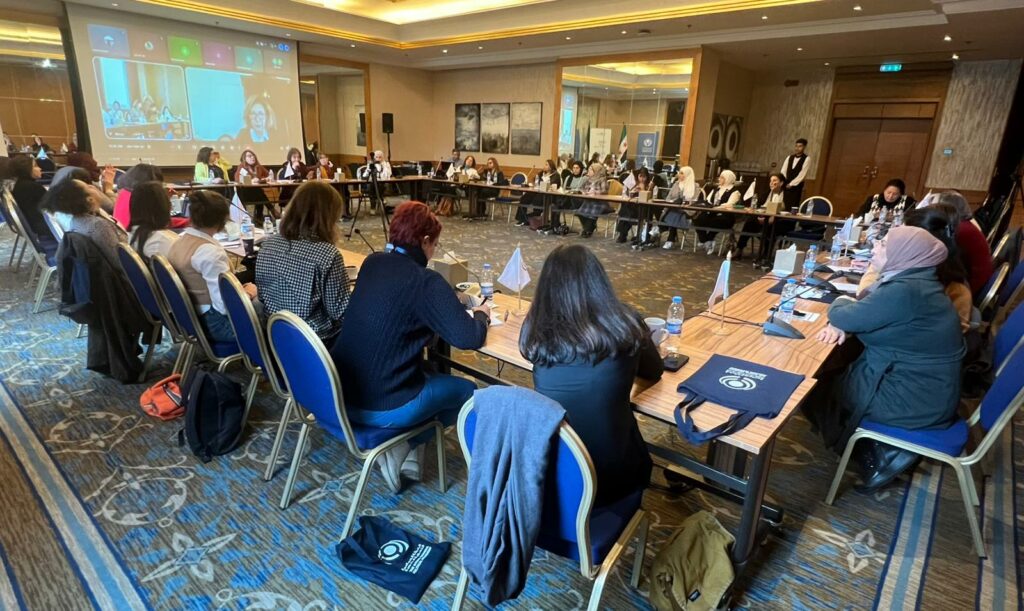
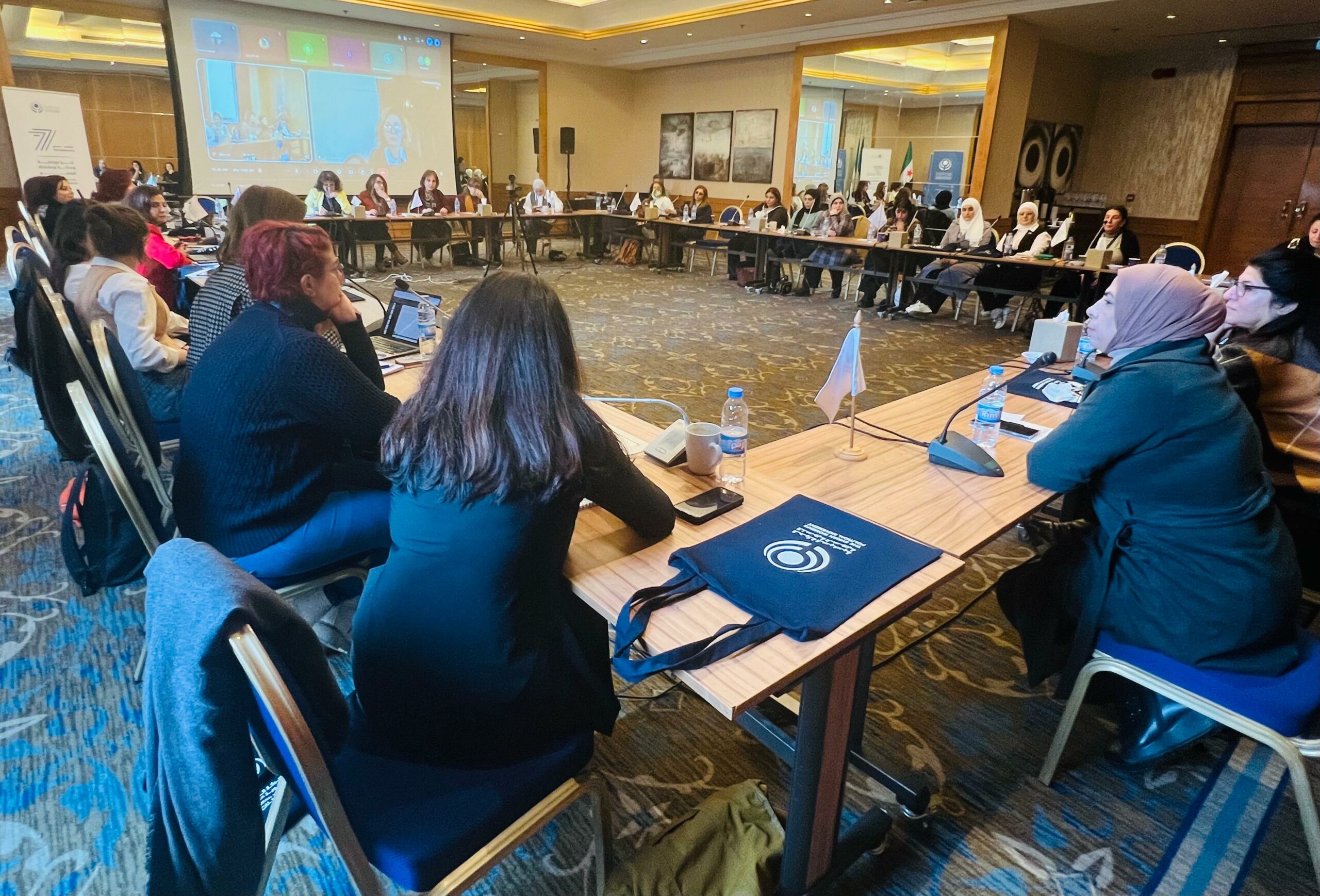
The Syrian Women’s Political Movement held its Seventh General Conference from 14 to 16 February 2026, in Beirut, under the slogan “Towards Citizenship, Justice, and Participation for All,” with in-person and virtual attendance by members of the General Assembly.
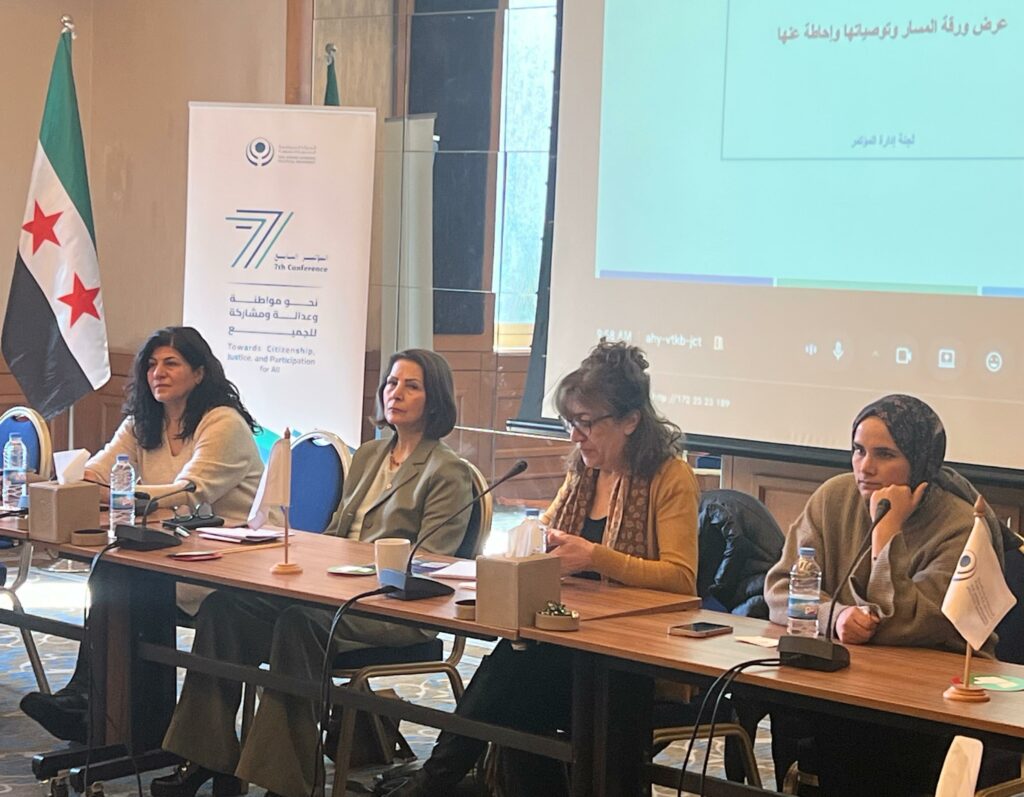
On the first day, the conference proceedings were opened with a welcoming speech by the Conference Preparatory Committee, followed by remarks from General Secretariat member Wejdan Nassif, in which she stated: “We have struggled for fair representation of women in decision-making positions, we have struggled for transitional justice that does not close wounds before healing them and ensuring non-repetition, and we have struggled for a feminist peace that sees human security, not regime security, as the essence of politics.” The opening speech affirmed that: “Our struggle did not end with the fall of the regime; rather, it began anew. It will not end until a state of equal citizenship is achieved — a state of law, a state of justice, and a state that sees women as full partners in shaping the future.”
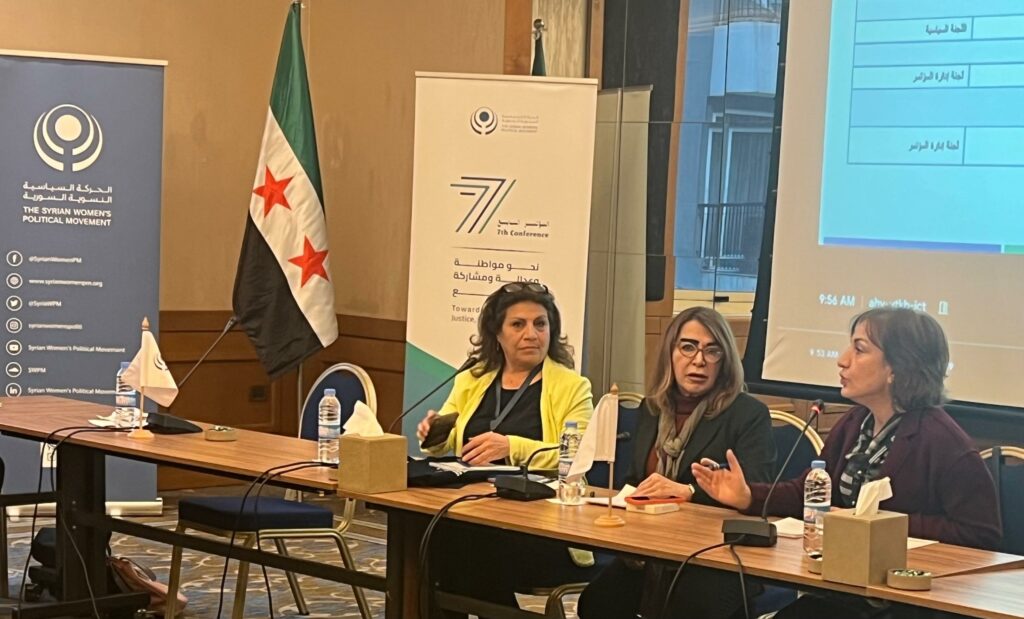
The first day witnessed the election of the Conference Management Committee, which included the following members: Rola Al-Rukbi, Salma Sayyad, and Muna Dawwa.
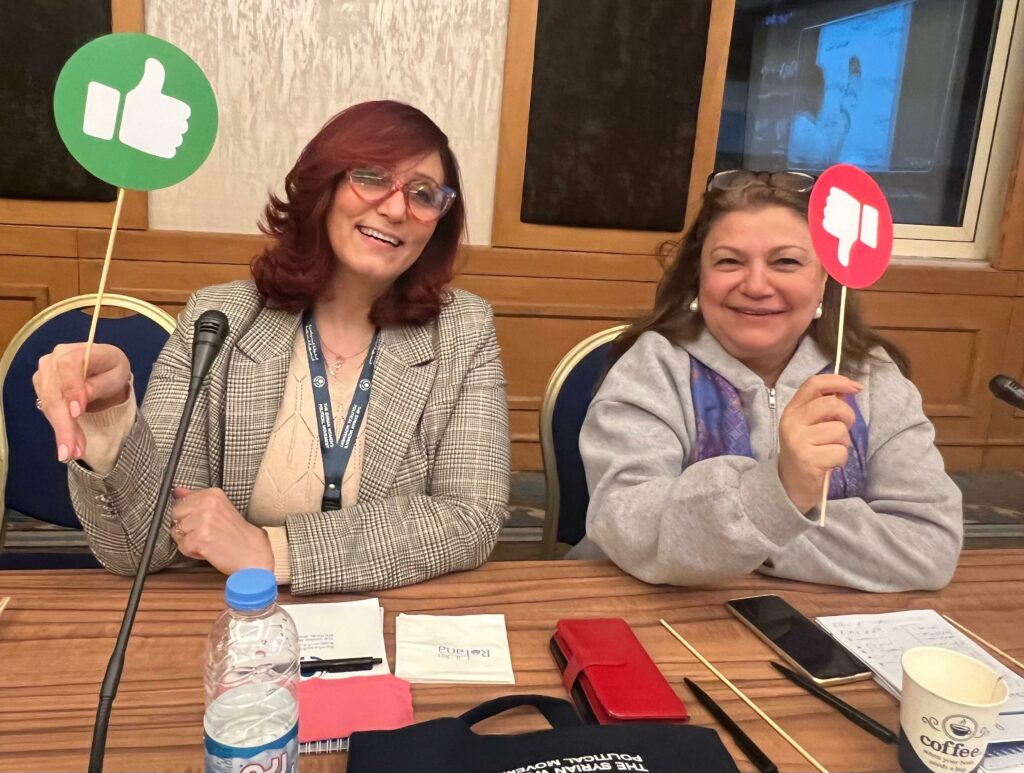
The political report was presented and voted on by the General Assembly. A position paper entitled “The Position of the Syrian Women’s Political Movement on the Current Reality and the Transitional Phase in Syria” was also discussed and approved.
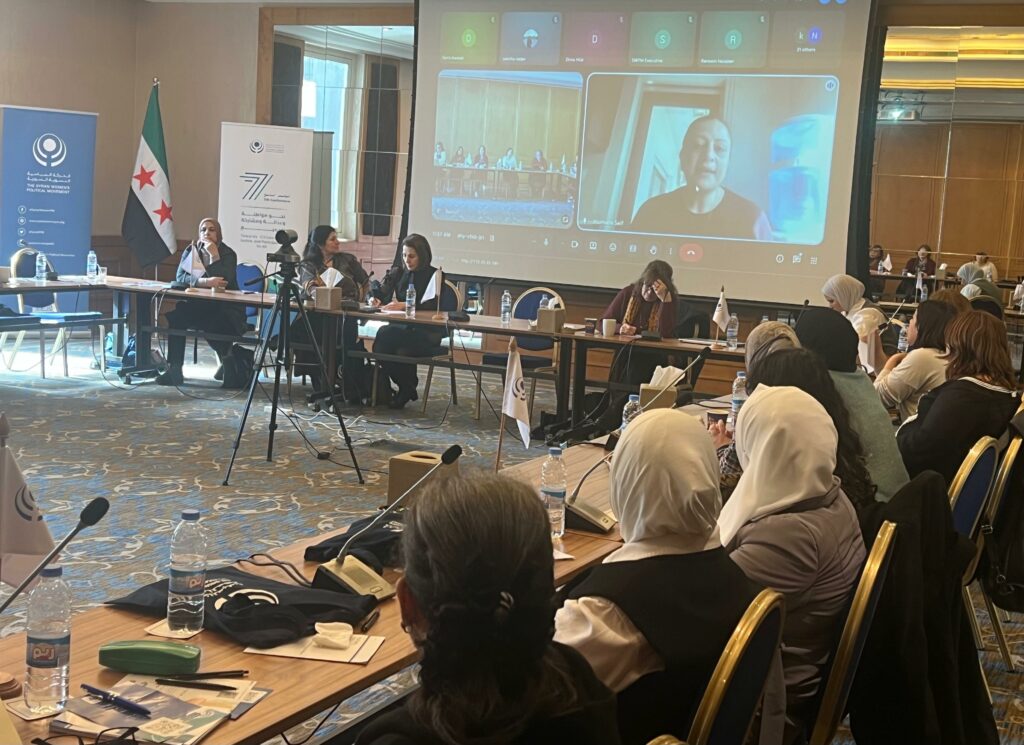
On the second day, the organizational sessions resumed, during which the reports of the General Secretariat and all committees and teams were presented. This session also addressed all movement programs and projects, foremost among them the Feminist Political Track, and the National Consultations Program. All papers issued by the Syrian Women’s Political Movement were reviewed, along with the key achievements accomplished between the two conferences. Proposals to amend the internal bylaws were also presented.
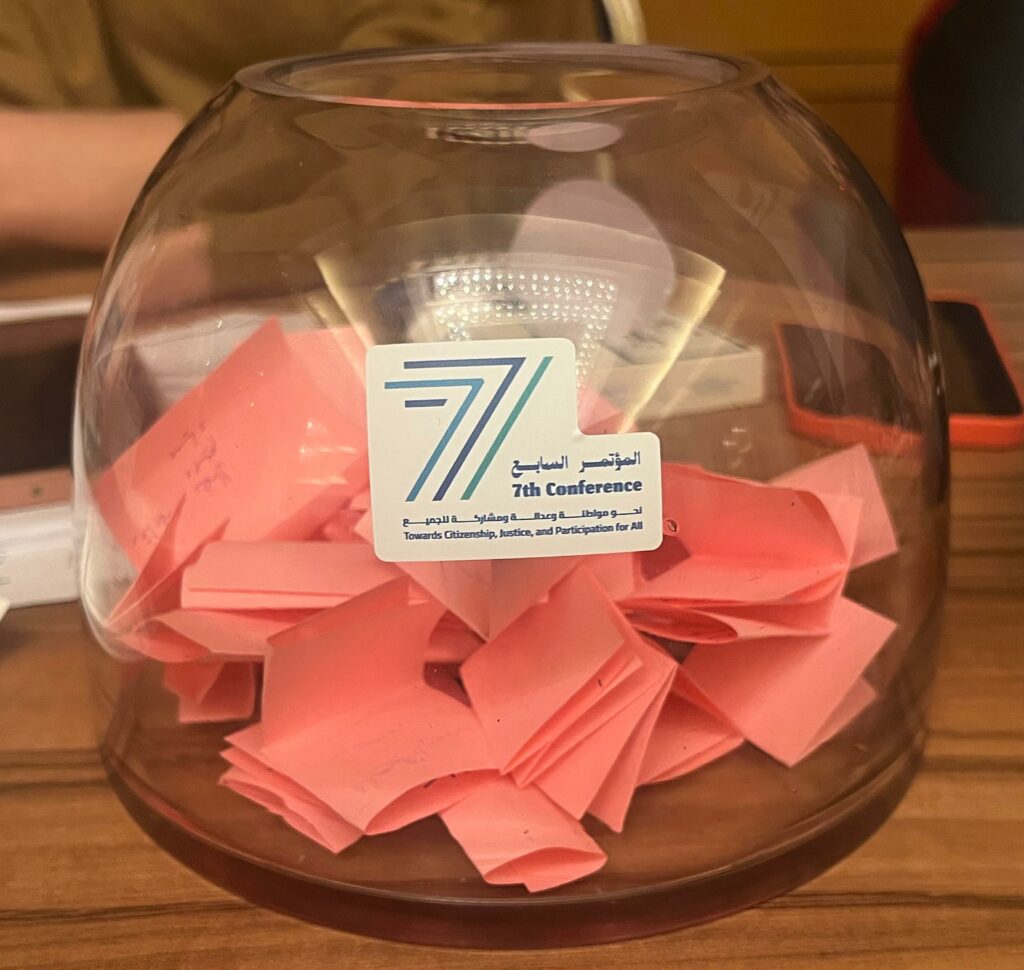
In the final session of the second day, elections were held for the General Secretariat and the Oversight Committee. All candidates presented their electoral programs, and democratic elections were conducted. Following the announcement of the results, a handover ceremony took place between the former and newly elected General Secretariat.
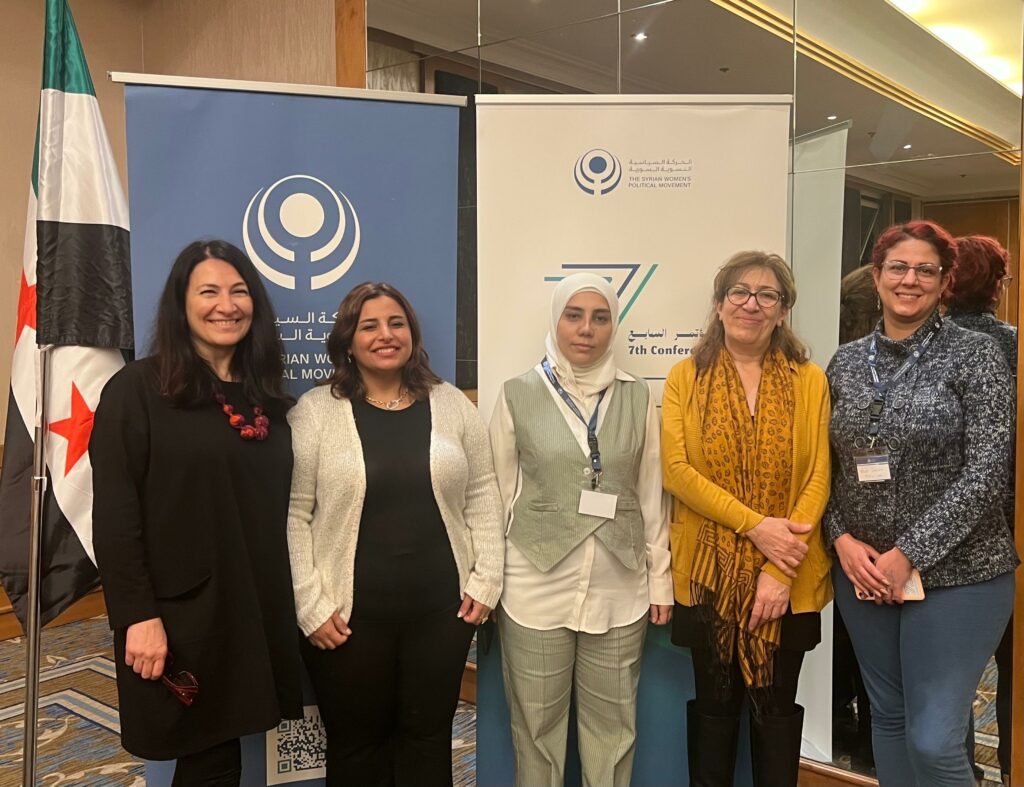
The new General Secretariat is composed of the following members: Rawia Alshommar, Mariam Jalabi, Nour Salam, Hiam Haj Ali, and Wejdan Nassif. The newly formed Oversight Committee consisted of: Hanan Ahmad, Nidal Jujak, and Wasim Hassan.
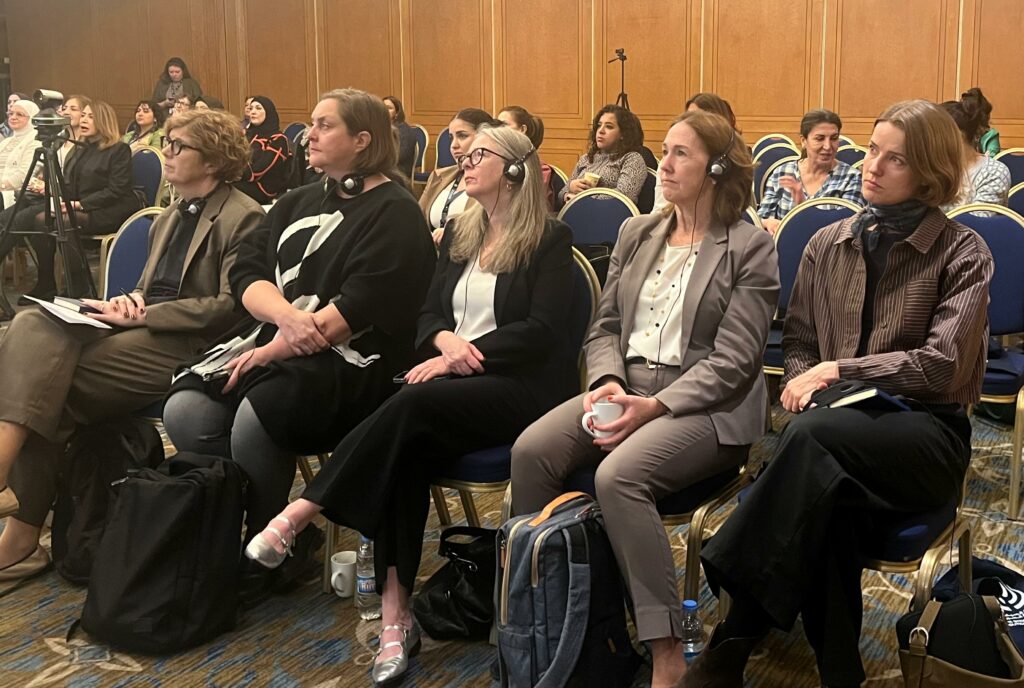
The closing session on the third day was attended by a number of international partners and supporters. The session was moderated by General Secretariat member Mariam Jalabi.
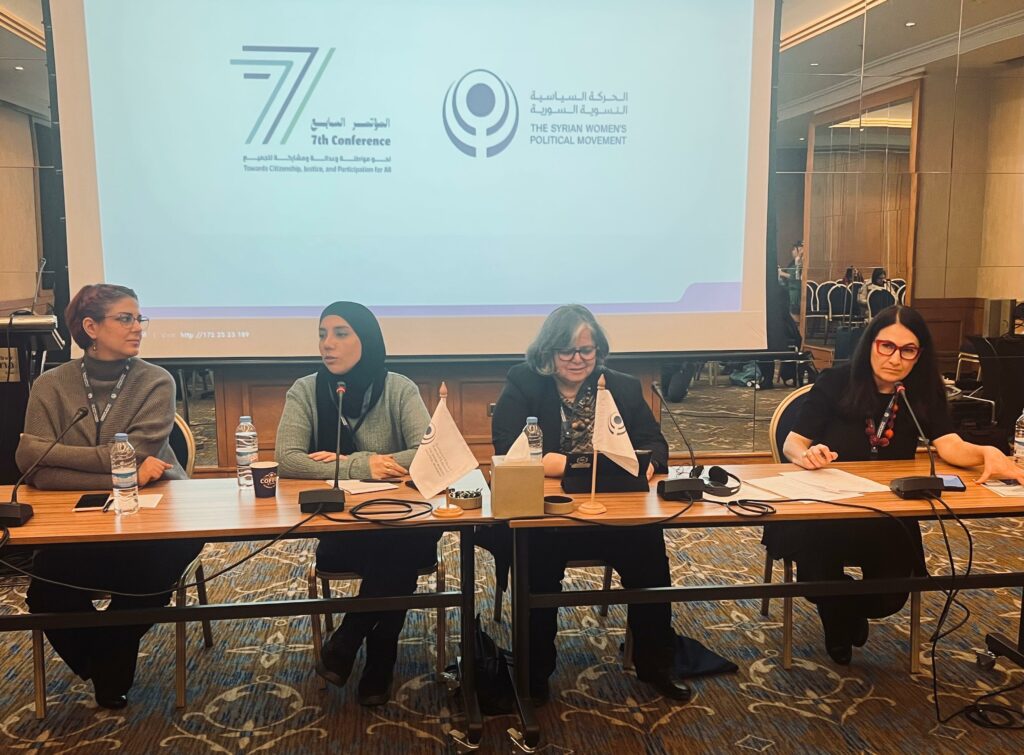
The session began with Lina Wafai, a member of the Syrian Women’s Political Movement, reading the final communique of the Seventh General Conference, which stated: “Political and participatory engagement is not a secondary demand, but rather a fundamental guarantee for breaking with the past and preventing the return of authoritarianism in new forms,” and that: “Building a state of equal citizenship requires a constitution that recognizes and protects Syrian diversity, and guarantees substantive equality and equal opportunities.” Regarding the transitional justice track, the statement affirmed: “Transitional justice holds a priority that cannot be postponed after long years of conflict and violations; it is a prerequisite for safeguarding civil peace, preventing recurrence, and rebuilding trust among Syrians.” The statement concluded by affirming: “Our compass has been and will remain Syria, and we will continue our work towards a state in which human dignity is protected, and in which democracy, citizenship, justice, and participation for all are realized.”
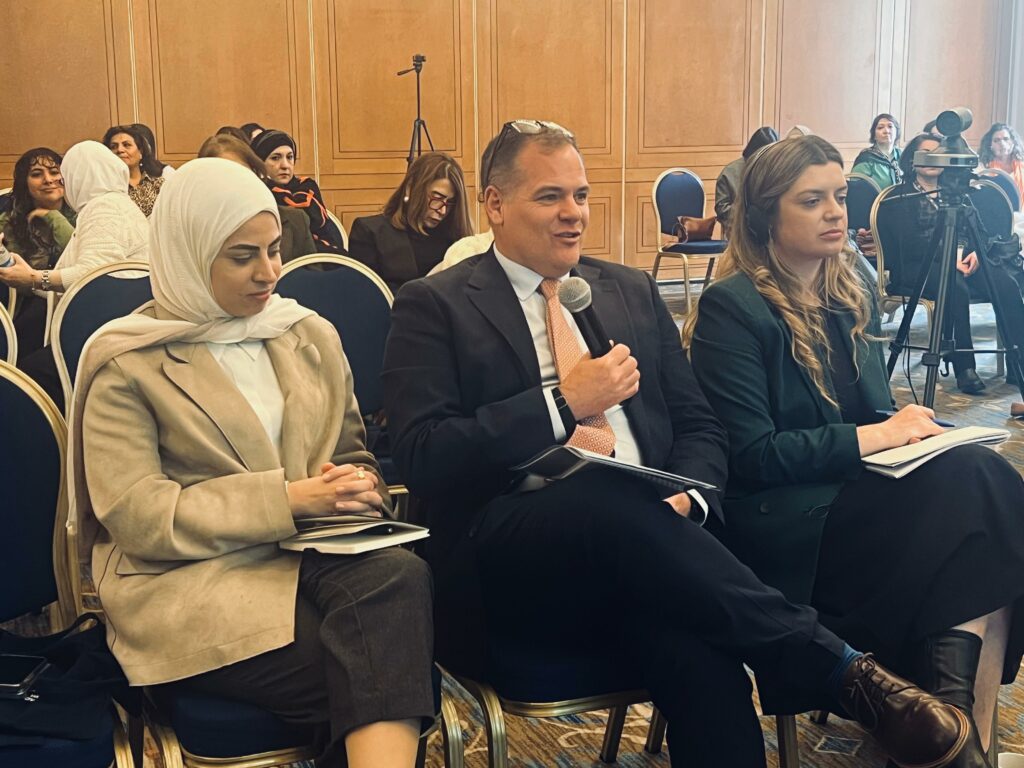
Following that, General Secretariat members Nour Salam and Hiam Haj Ali presented the main programs, activities, and achievements of the Syrian Women’s Political Movement. This was followed by an open dialogue between the guests and SWPM members, during which representatives of various countries affirmed their commitment to supporting Syrian women and the transitional process.
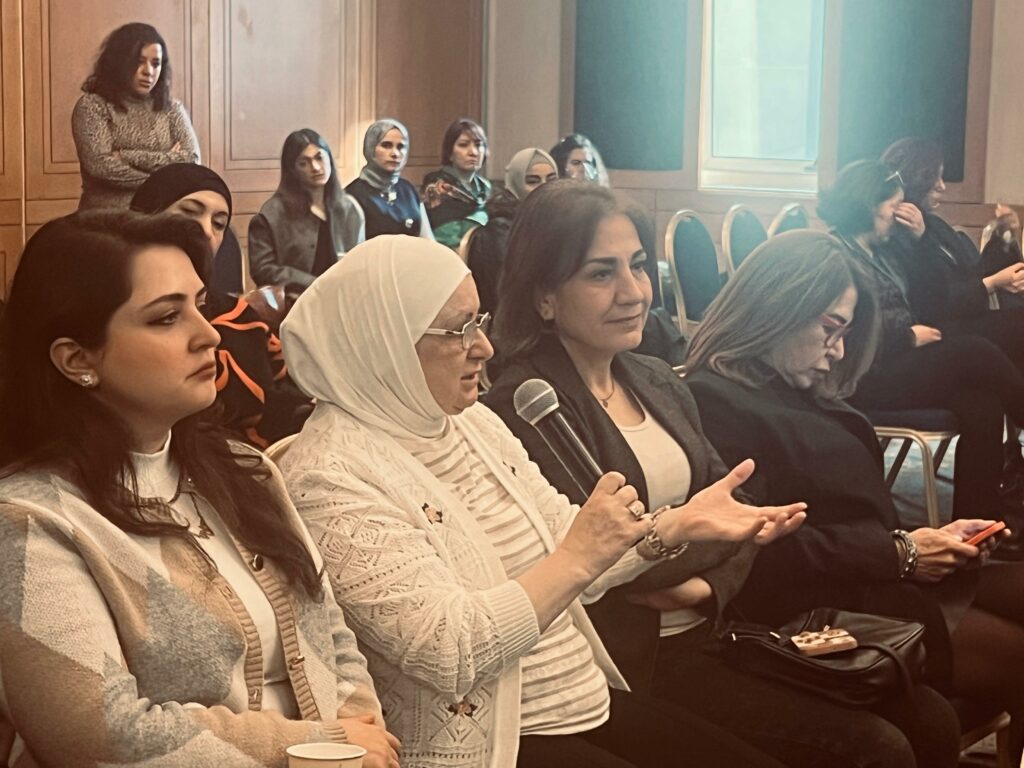
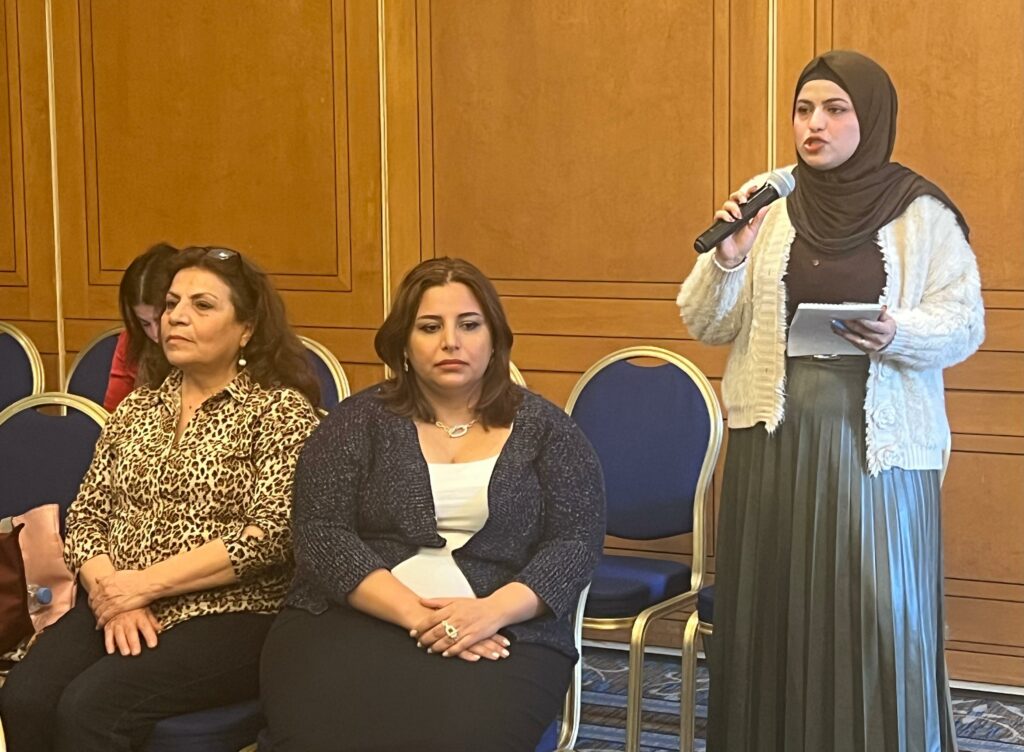
Members of the Syrian Women’s Political Movement also discussed the issues of reconstruction and transitional justice from a feminist perspective, emphasizing the necessity of protecting women from all forms of violence, the importance of women’s participation in political life, and the need to continue working towards achieving a Syria that is a state of citizenship, justice, and democracy.